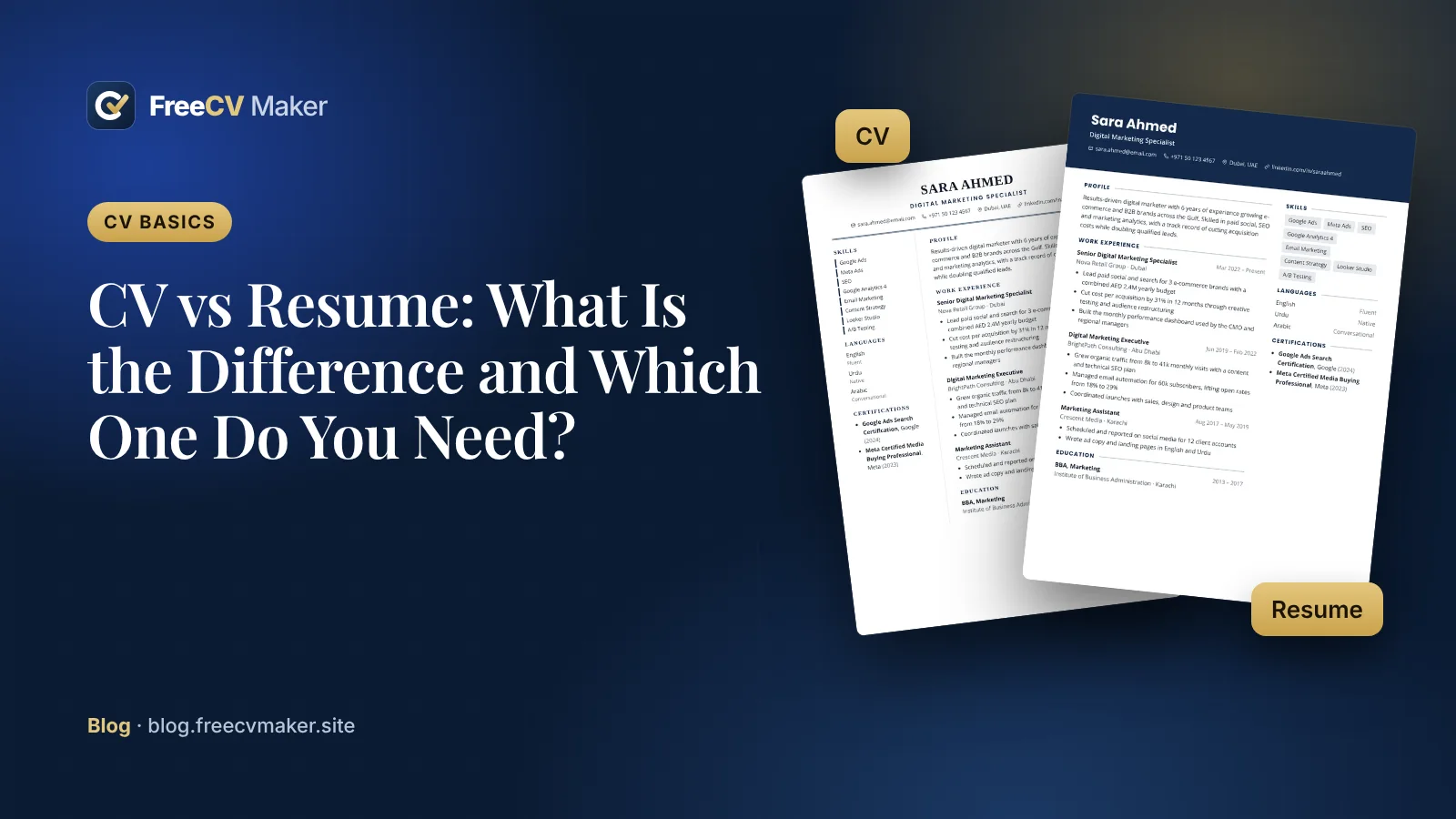
People often use the words CV and resume as if they mean the same thing. Sometimes they do, and sometimes they do not. It depends on where you apply.
The short answer
- In the UK, Ireland, Europe, the Middle East, Pakistan, India and much of Africa and Asia, "CV" is the everyday word for the document you send with a job application.
- In the USA and Canada, that document is usually called a resume, and "CV" usually means a longer academic document.
Typical differences
| Resume (US/Canada) | CV (most other countries) | |
|---|---|---|
| Length | Usually 1 page, 2 for senior roles | 1–2 pages for most jobs |
| Focus | Achievements for this job | Experience, education and skills |
| Photo | Usually not included | Common in some countries |
Academic CVs
In universities and research, a CV can be much longer. It lists publications, conferences, teaching and grants, and it grows over your whole career.
Which should you use?
Use the word and format that the job advert and the country use. If the advert asks for a resume, keep it short and focused. If it asks for a CV, one or two pages is still the safe choice for most non-academic jobs.
Make yours in minutes
Whatever you call it, you can build it for free with Free CV Maker. Read our guide on how to write a CV for the 7 rules recruiters look for.
Turn these tips into a great CV
6 premium templates, live preview, free PDF. No sign-up.